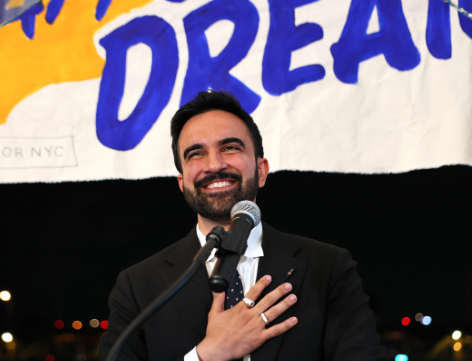
It has been a relatively quick rise to the top for Mayoral hopeful Zohran Mamdani. Mamdani grew up in New York City as the son of Ugandan immigrants. He was elected to the New York State Assembly, showcasing himself to be a progressive new voice with a strong focus on affordability, accessibility, transit, and tenant protections. He built himself up primarily through community organizing. He joined strikes, pushed forward local political campaigns, and created new budgets for the subway system. By starting out as an activist, this positioned him as a young, energetic leader who could bring this specifically grassroots energy into strong legislative results.
There are two advantages specific to Mamdani and his rise. The first would be New York City’s political climate after dealing with a few recent years of economic stress, rising cost of living, and real concerns about public services, which then created a need for strong policy reforms to be implemented. As a Democratic Socialist, Mamdani utilized affordability as a key theme within his political messaging. Thus, this messaging highly resonated with younger voters and constituencies that were drastically affected by this cost-of-living crisis. Being a more insurgent candidate, Mamdani was able to take advantage of certain fragmentations and vulnerabilities that existed in the campaigns of more established candidates such as Cuomo. In the 2025 Democratic primary, Mamdani worked with the fact that established candidates like Cuomo had certain baggage attached to him, thus making voters more receptive to his outsider, underdog status. The media narrative and early polling of Mamdani showcased a political candidate who was organized with a message that also connected with voters of all ages and demographics.
Mamdani’s campaign strategy combined local neighborhood-level organizing mixed in with clear ideas on policy reform. He emphasized wins that he helped to produce, such as budget allocations for transit and debt relief, while also staking out distinct positions on policing, housing, and municipal spending that positioned him left of many traditional Democrats. At the same time, though, this made him quite pragmatic in promise. He proposed radical ideas such as fare relief pilot programs, targeted public investments, and a broad appeal to make the city more affordable for everyday residents. This combination of activist credibility mixed in with proposing concrete municipal ideas, made his rise legible to voters who were otherwise dissatisfied with the status quo. This also helped him to secure key endorsements and media attention that traditionally take candidates years to accumulate.
Though, how likely is it actually for Mamdani to become New York City’s new Mayor? There are several factors that point positively in Mamdani’s favor. As of the September 2025 polling, Mamdani holds a sizable lead among general election voters in New York City. This was propelled by strong support among younger, liberal, and many nonwhite voters. Prominent endorsements followed in Mamdani’s surge, thus increasing his institutional legitimacy. These metrics suggest that he is not just an insurgent, but actually a front-runner with measurable positive voting insights.
However, nothing is certain yet. New York City’s voting population is both diverse and cautious. Positions that may energize one bloc of voters, such as sharp critiques of foreign policy or controversial stances on definitions of antisemitism, can trigger intense backlash among other constituencies and voters. Critics of Mamdani, including candidate Cuomo and President Trump, have already placed a great degree of emphasis on these tensions. Beyond this, there are many dynamics within the general election that are also worth paying attention to, including turnout, messaging shifts, and how opponents may frame public safety and city management. Institutional endorsements may help, but they also can invite scrutiny. At the end of the day, being the Mayor is an executive job that demands coalition-building across boroughs, business groups, labor, and public safety stakeholders. Success thus requires translating movement energy into governing coalitions.
The candidacy of Mamdani showcases a realistic and formidable bid rather than a symbolic one, meaning that he has put in the work to truly succeed. He has managed to start from the position of being a grassroots organizer, to soon after receiving key political endorsements. Whether Mamdani becomes the next Mayor depends on his ability to broaden support without alienating his core voting base. He must also respond to critiques that touch on security and identity politics, and also demonstrate managerial competence to voters who are worried about day-to-day city governance. If he can expand his coalition while also keeping the same energy that propelled him this far, his chances of winning are strong. However, he must stay focused and not allow for polarizing debates to consume him, lest he fail to reassure key swing voters in the general election.




Leave a Reply