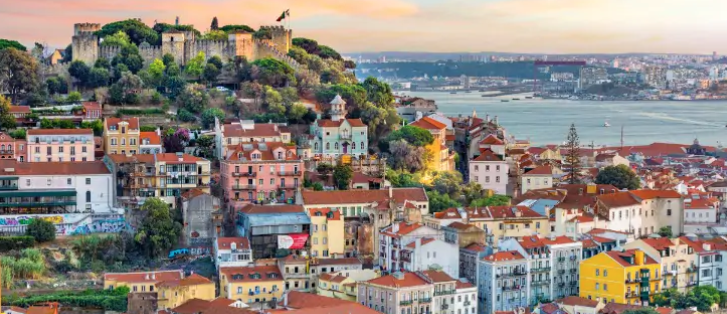
Recently, Lisbon has turned from a historic and quaint capital into one of Europe’s most dynamic cities. Tourists come to Lisbon in large numbers for its beautiful streets, while international investors come to purchase property and young professionals relocate for new opportunities. There is a complicated rise in gentrification behind the revival of Lisbon, though. Gentrification is multi-layered as well. In the case of Lisbon’s rising gentrification, it has completely changed neighborhoods, displaced residents, and created new debates related to preserving local culture while also transforming local economies. Therefore, there are many opportunities but also challenges that are currently facing Lisbon.
This new rise of gentrification in Lisbon combines historical, economic, and political factors, among other things. Over the past few decades, Lisbon dealt with urban neglect. Many buildings unfortunately aged and were left in poor condition. Following this, there was little investment in urban renewal. This, though, started to change in the early 2000s, in particular following the European debt crisis. This was around when international interest in Lisbon rose, due to its rather low property prices compared to other capital cities in Europe. There were governmental programs at play as well, such as the Golden Visa which offered residency to foreign investors who purchased Portuguese property. There were also favorable tax incentives present for retired people. This, then, attracted more residents coming from other countries. The tourism industry in Portugal also encouraged converting traditional housing into short-term rental properties. With all these new driving forces converging, this created a fertile ground for rapid urban change.
A largely visible consequence of gentrification in Lisbon has been the displacement of long-term residents. Many central neighborhoods in Lisbon, such as Alfama, Mouraria, and Bairro Alto, which classically were home to working-class families, dealt with significant increases in their rent. Landlords frequently will renovate and re-list apartments as “luxury housing” or “tourist accommodation,” which then prices out locals who can no longer afford to stay there. Regarding older residents, this is a significant financial challenge for them and also a loss of their community and traditions. When residents leave their longstanding neighborhoods, the social fabric of these neighborhoods deeply change, since the neighborhoods then become populated with more transient residents or tourists who don’t engage with the locals.
Along with displacing local residents, gentrification has also deeply changed the cultural and artistic landscape of Lisbon. The city for a long time has been celebrated as being an authentic haven for creative people. With traditional fado music, neighborhood festivals, and locally-owned and sourced restaurants, Lisbon’s identity has been forged through its local culture. As gentrification increases, many of these places are under direct threat of disappearing. Traditional taverns become replaced by trendy and upscale cafés, while international chains replace longstanding local stores. While some may argue that this effect of modernization can help Lisbon compete on a more global stage, other people see this as the city becoming more and more homogenized. This, then, erodes what has made Lisbon truly unique for centuries. Therefore, this tension between preserving the local heritage and embracing new change has become a core debate regarding the transformation of the city.
There have been some benefits brought to Lisbon through its increasing gentrification. Investment in buildings has brought care to buildings that once were neglected, improved the infrastructure of the city, and created new economic opportunities both in hospitality and real estate. For younger Portuguese residents, this has opened new employment and entrepreneurship pathways. Lisbon has also become a global hub for technology startups, creative industries, and international events. With this newfound economic growth mixed in with unfortunate social displacement, the true complexity of gentrification becomes on full display. It is not a completely negative driving force, but it is also not entirely positive. Instead, some win but some also lose in the process.
The gentrification that has recently swept up Lisbon showcases distinct challenges at play when it comes to balancing development with social justice. New investments into the city have been made which overall have been relatively positive. However, there also has been widespread displacement of local residents due to these improvements. Therefore, Portuguese policymakers have a long task ahead of them, one filled with needing to foster further growth economically while also protecting local communities from further displacement and economic precarity. Measures such as rent control, stronger tenant protections, and regulations on short-term holiday rental apartments have been proposed as ways in which the pressure may be eased bit-by-bit. The future of Lisbon rests on finding a balance between allowing modernization to continue further without sacrificing local traditions and communities that have provided the backbone of the city for years. Gentrification has put Lisbon into a crossroads, one which forces the city to confront questions about who it is for and what kind of identity it will have in its future.




Leave a Reply