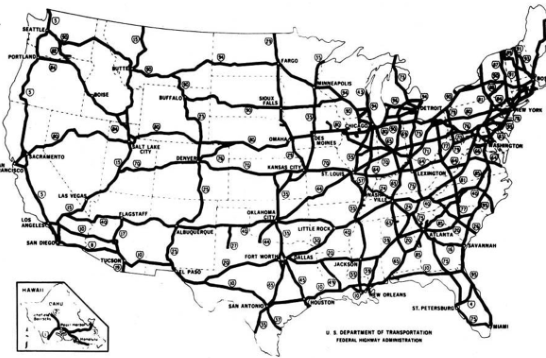
America’s railroads have long been the backbone of the nation’s freight and passenger mode of transport. They also are entering into a large period of profound transformation. The railroad system was once synonymous with industrial might and the expansion further West, but they now unfortunately face a future that is shaped by technological innovation, environmental concerns, and shifting economic priorities. Taking a look into this evolution may showcase insights into how America’s transportation landscape may come to be in the future decades.
Freight railroads work to carry the bulk of goods across the landscape of the United States. They increasingly are adopting more advanced technologies that work to improve efficiency and also reduce further operational costs. Precision scheduled railroading (PSR) is a managerial approach that optimizes the routes for trains and train yard operations, and it has become a standard technological practice among major rail carrier systems. It is controversial for its impact upon both staffing and smaller communities, but it also has thoroughly streamlined operations and reduced transit times overall. While providing operational improvements, automation and data analytics are also revolutionizing the railroad industry across America. Sensors, predictive maintenance, and real-time tracking have allowed for rail companies to anticipate equipment failures, optimize the use of fuel, and reduce delays, which have resulted in significant savings and improved reliability.
Environmental sustainability is also driving these major changes as well. Rail transport is already among the most energy-efficient modes of movement that is currently available, but the rail industry faces pressure when it comes to further reducing its carbon footprint. Many companies are investing in cleaner rail systems that are powered by liquefied natural gas (LNG), or else also exploring hybrid and fully electric models of transportation. As well as this, railroads are also being recognized as being critical to America’s climate goals, as they can positively get rid of road congestion and reduce overall greenhouse gas emissions by moving more freight items off of trucks and onto rails. Government incentives and public-private partnerships can work to additionally help these green initiatives, thus positioning the railroad as being a positive and sustainable network of transportation moving into the future.
The passenger rail is historically far less popular in the United States than it is in European or Asian countries. However, the passenger rail network is hopefully going to have a new resurgence, particularly in dense urban areas. High-speed rail systems and regional rail systems must be further invested in. This will work to lessen congestion on major highways and also put less of a strain on airports and air travel. There are current rail projects with increased interest, such as California’s High-Speed Rail and the modernization of the Northeast Corridor rail system. Thus, there exists a growing interest in improving passenger rail systems in America, as they can drive local economies while also reducing climate change. However, there are some challenges that rail initiatives face, which includes high costs, regulatory issues, and political debates over funding. Better coordination must be implemented between federal, state, and local governments, as well as between private stakeholders and companies who wish to invest.
New innovations beyond technology are coming to exist. These include integrating the rail system with broader logistics and shipping networks, and also linking the rail system to intermodal terminals. This allows for a smoother transfer to occur between rail, truck, and maritime shipping. It also works to better enhance efficiency while also allowing for the rail system to remain competitive in a global economy where speed, reliability, and flexibility are crucial for overall success.
Looking into the future, America’s railroads are set to play a crucial role in the country’s further development. This takes a dual approach, as the rail system works both as a modern, technology-driven freight network for logistics as well as an increasingly viable option for passenger transport. The overall future of the rail industry depends on balancing efficiency, sustainability, and community needs, while also working on accepting innovation and investment. The railroad systems that ultimately adapt the most successfully will be able to preserve their historic importance while also becoming central to the nation’s economic and environmental strategies overall.
The future of America’s railroad system is not static, nor is it nostalgic. It is dynamic, technology-driven, and environmentally conscious. Therefore, an improved system is promised which will connect the country more efficiently, sustainably, and equitably than ever before.





Leave a Reply