Trauma pervasively challenges many people around the world. Particularly, trauma affects those who have previously been incarcerated. This may occur both during and after release. Many people who have previously been incarcerated hold psychological scars. These may include Post-Traumatic Stress Disorder (PTSD) and Substance Use Disorder (SUD). Therefore, new treatments are being proposed. A research study conducted by Nancy Wolff, Jessica Huening, Jing Shi, B Christopher Frueh, Donald Hoover, and Gregory McHugo showcase that therapeutic treatments “support implementing either Seeking Safety or M-TREM to treat incarcerated men with co-morbid PTSD and addiction problems” (Wolff, Huening, Shi, Frueh, Hoover, McHugo, 2015). As well as this, it was found that PTSD treatment, irrespective of identity, was quite useful in terms of treating patients.
In a study conducted by Nabeela Malik, Emma Facer-Irwin, Hannah Dickson, Annie Bird, and Deirdre MacManus, they state in their paper’s abstract that:
“Posttraumatic stress disorder (PTSD) is overrepresented in prison relative to community populations and can be difficult to manage in an environment which can inherently exacerbate trauma-related symptomology. Little is known about the effectiveness of trauma-focused interventions in prison and less is known about factors that moderate the effectiveness of these interventions. We examined the effectiveness of trauma-focused interventions in prison relative to prison controls using meta-analytic techniques. We further used meta-regression analysis to examine treatment, methodological and participant-level moderators to determine factors that increased the effectiveness of these interventions. From 16 studies eligible for the meta-analysis, we found a small but significant effect size for trauma-focused interventions…Treatment length, study quality, outcome type, and gender were not significant moderators of treatment effectiveness” (Malik, Facer-Irwin, Dickson, Bird, MacManus, 2021).
Therefore, it becomes apparent that PTSD treatment can be helpful to many types of people, particularly to those who are already in the carceral system and people who have been released from incarceration.
In a recent study conducted by Nancy Wolff, Jessica Huening, Jing Shi, Christopher Frueh, Donald Hoover, and Gregory McHugo, it is stated that “for men, the likelihood of experiencing assaultive violence increases with the following characteristics: nonwhite, low education, low income, and urban residence; characteristics that are prevalent among incarcerated populations” (Wolff, N. et al. 2). Thus, the male population needs more support, particularly those who have been incarcerated. Beyond this, “the prevalence of trauma among incarcerated men has been found to be higher for physical trauma compared to sexual trauma, in persons with mental disorders than without disorders, and those experiencing childhood abuse than with no childhood abuse” (Wolff, N. et al. 2). There is also the comorbidity of substance use disorder, where it is stated that “a current substance use diagnosis is often comorbid with PTSD, with rates ranging from 20% to 58%” as well as “the large number of incarcerated males (~1.4 million), combined with their high rates of trauma exposure, PTSD, and related SUD, suggests a significant need for trauma treatment geared for men in correctional settings. There is a need to screen for and treat trauma-related symptoms, as well as create a correctional environment that is more trauma-informed.” Helping in the treatment of trauma becomes a key component in helping people, particularly people who have been incarcerated, move forward.
There are certain specific guidelines that people must follow when it comes to treating states such as PTSD. The current “[guidelines for PTSD] highly rank psychotherapy interventions incorporating cognitive-behavioral orientation…(1) integrated treatment for co-morbid conditions is optimal, compared to parallel, sequential, or single treatment models; (2) trauma-related difficulties are best treated in stages, with the first stage focusing on safety through recognition, education, and skill building that develop coping skills to replace use of substances or other self-harming behaviors; and (3) environment matters in the selection of type of intervention (4). The best therapy is exposure therapy. Other interventions include Seeking Safety (SS) and Trauma Recovery and Empowerment Model (TREM). Incarcerated men are willing and able to participate in trauma-healing interventions, and manualized interventions can be implemented with fidelity in correctional environments” (Wolff, Huening, Shi, Frueh, Hoover, McHugo, 2015).
Regarding PTSD in prison settings, “posttraumatic stress disorder (PTSD) is overrepresented in prison relative to community populations and can be difficult to manage in an environment which can inherently exacerbate trauma-related symptomology. Little is known about the effectiveness of trauma-focused interventions in prison and less is known about factors that moderate the effectiveness of these interventions. We examined the effectiveness of trauma-focused interventions in prison relative to prison controls using meta-analytic techniques. We further used meta-regression analysis to examine treatment, methodological and participant-level moderators to determine factors that increased the effectiveness of these interventions. From 16 studies eligible for the meta-analysis, we found a small but significant effect size for trauma-focused interventions…Treatment length, study quality, outcome type, and gender were not significant moderators of treatment effectiveness” (Malik, Facer-Irwin, Dickson, Bird, MacManus, 2023).
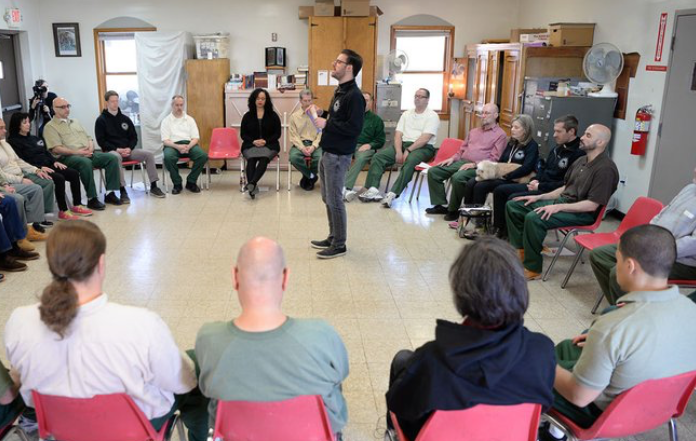
Specifically, there are different therapy types that people suffering from PTSD can utilize. “Therapies that include exposure as a treatment component have proven effective in settings characterized by ongoing violence, limited privacy, and housing instability” (2). There are also trauma therapies that are intended to be delivered in a group setting where participants are able to share their trauma narratives. However, unlike its intention, group settings can “prohibit group members from sharing full trauma narratives” (Zielinski et al. 2). Thus, “encouragement from others” become important in such circumstances (Zielinski et al. 10). A study conducted on women’s perspectives on group psychotherapy shows that “many women had considered dropping out at some point during the group, often due to emotions like fear and shame…and interpersonal concerns related to confidentiality, judgement, or trust. However, 88.8% of the women who originally enrolled completed” the group therapy after support from facility counselors and staff peers, showing the influence of such assistance (Zielinski et al. 10).
In the end, trauma remains a persistent and deeply rooted issue within incarcerated and formerly incarcerated populations. Studies presented in the article consistently demonstrate that PTSD and co-occurring substance use disorders are not only prevalent in correctional settings, but also treatable. Although effect size may be modest, the evidence affirms that trauma-focused interventions, particularly those grounded in cognitive-behavioral frameworks and integrated treatment models, provide meaningful benefits. Importantly, environment, support, and proper screening significantly shape treatment outcomes. While fear, shame, and distrust can pose barriers, encouragement and institutional support can substantially increase rates of completion and engagement of group psychotherapies. Ultimately, addressing PTSD within the carceral system is a matter of rehabilitation, equity, and public health. Supporting trauma recovery among incarcerated individuals can strengthen the potential for successful reintegration into society.
- Implementation and effectiveness of integrated trauma and addiction treatment for incarcerated men — Wolff, N. et al. (2015). Controlled trial of integrated trauma and substance-use treatment (SS + M-TREM) for incarcerated men with PTSD and SUD. URL: https://pubmed.ncbi.nlm.nih.gov/25617774/
- The Effectiveness of Trauma‑Focused Interventions in Prison Settings: A Systematic Review and Meta‑Analysis — (2021) Meta-analysis of trauma-focused interventions in prison settings, showing small but significant effects and identifying moderators. URL: https://pubmed.ncbi.nlm.nih.gov/34711095/
- “I’m not alone, my story matters”: Incarcerated women’s perspectives on the impact and acceptability of group psychotherapy involving imaginal exposure to sexual assault memories — Zielinski et al. (2021). Qualitative study of incarcerated women undergoing group imaginal exposure therapy for sexual‐assault trauma. URL: https://healthandjusticejournal.biomedcentral.com/articles/10.1186/s40352-021-00148-4






Leave a Reply