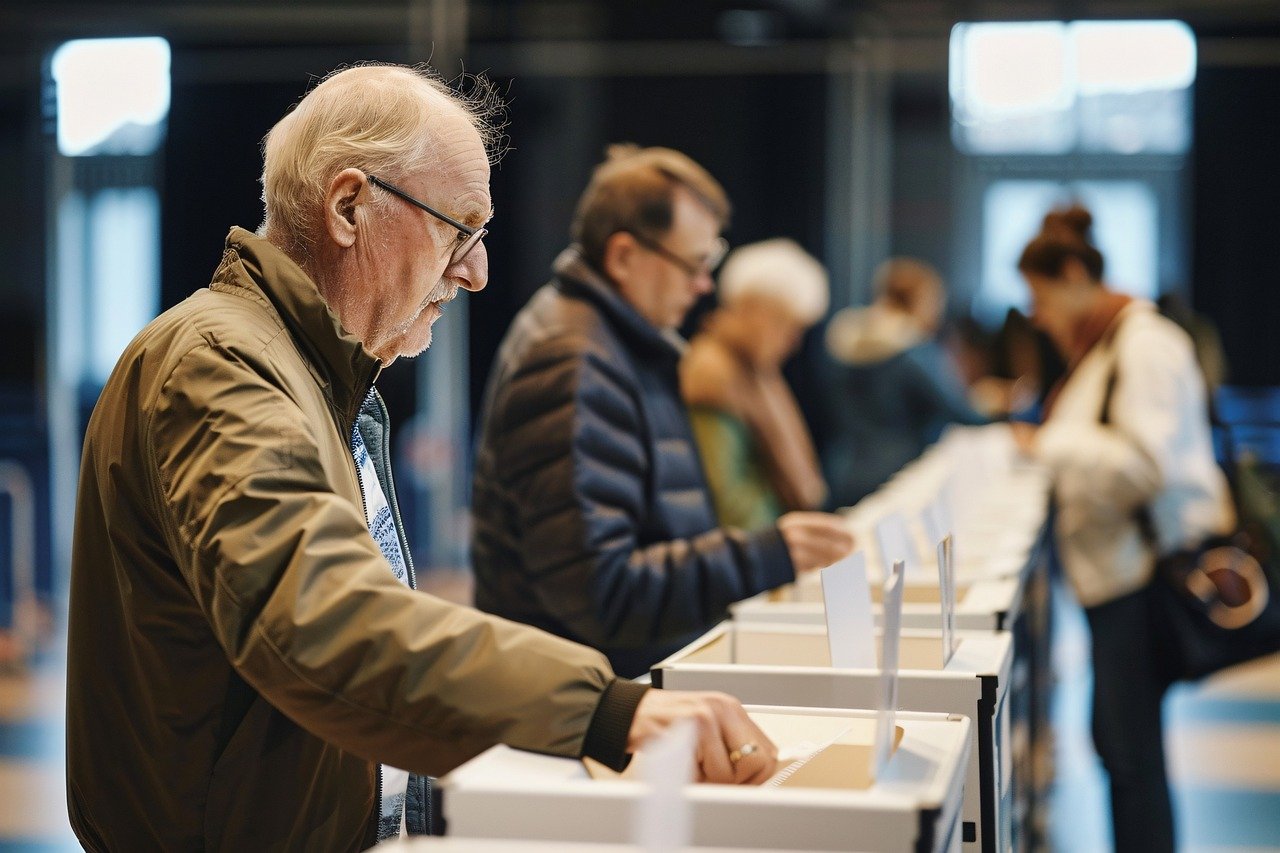

Why should we not commit crimes? There could be different answers depending on which morale you prioritize, but a practical reason not to is because you will lose your voice, which in democracy, is voting rights. Laws in 48 states ban people with felony convictions from voting. In 2022, an estimated 4.6 million Americans, representing 2 percent of the voting-age population, will be ineligible to vote due to these laws or policies, many of which date back to the post-Reconstruction era. In this election year, as the United States confronts questions about the stability of its democracy and the fairness of its elections, particularly within marginalized communities, the impact of voting bans on people with felony convictions should be front and center in the debate.
An estimated 4.6 million people are disenfranchised due to a felony conviction, a figure that has declined by 24 percent since 2016, as more states enacted policies to curtail this practice and state prison populations declined modestly. Previous research finds there were an estimated 1.2 million people disenfranchised in 1976, 3.3 million in 1996, 4.7 million in 2000, 5.4 million in 2004, 5.9 million in 2010, 6.1 million in 2016, and 5.2 million in 2020. One out of 50 adult citizens – 2 percent of the total U.S. voting eligible population – is disenfranchised due to a current or previous felony conviction. Three out of four people disenfranchised are living in their communities, having fully completed their sentences or remaining supervised while on probation or parole. In three states – Alabama, Mississippi, and Tennessee – more than 8 percent of the adult population, one of every 13 adults, is disenfranchised.
Florida remains the nation’s disenfranchisement leader in absolute numbers, with over 1.1 million people currently banned from voting, often because they cannot afford to pay court-ordered monetary sanctions. An estimated 934,500 Floridians who have completed their sentences remain disenfranchised, despite a 2018 ballot referendum that promised to restore their voting rights. One in 19 African Americans of voting age is disenfranchised, a rate 3.5 times that of non-African Americans. Among the adult African American population, 5.3 percent is disenfranchised compared to 1.5 percent of the adult non-African American population.
More than one in 10 African American adults is disenfranchised in eight states – Alabama, Arizona, Florida, Kentucky, Mississippi, South Dakota, Tennessee, and Virginia. Although data on ethnicity in correctional populations are unevenly reported and undercounted in some states, a conservative estimate is that at least 506,000 Latinx Americans or 1.7 percent of the voting eligible population are disenfranchised. Approximately 1 million women are disenfranchised, comprising over one-fifth of the total disenfranchised population.




Leave a Reply