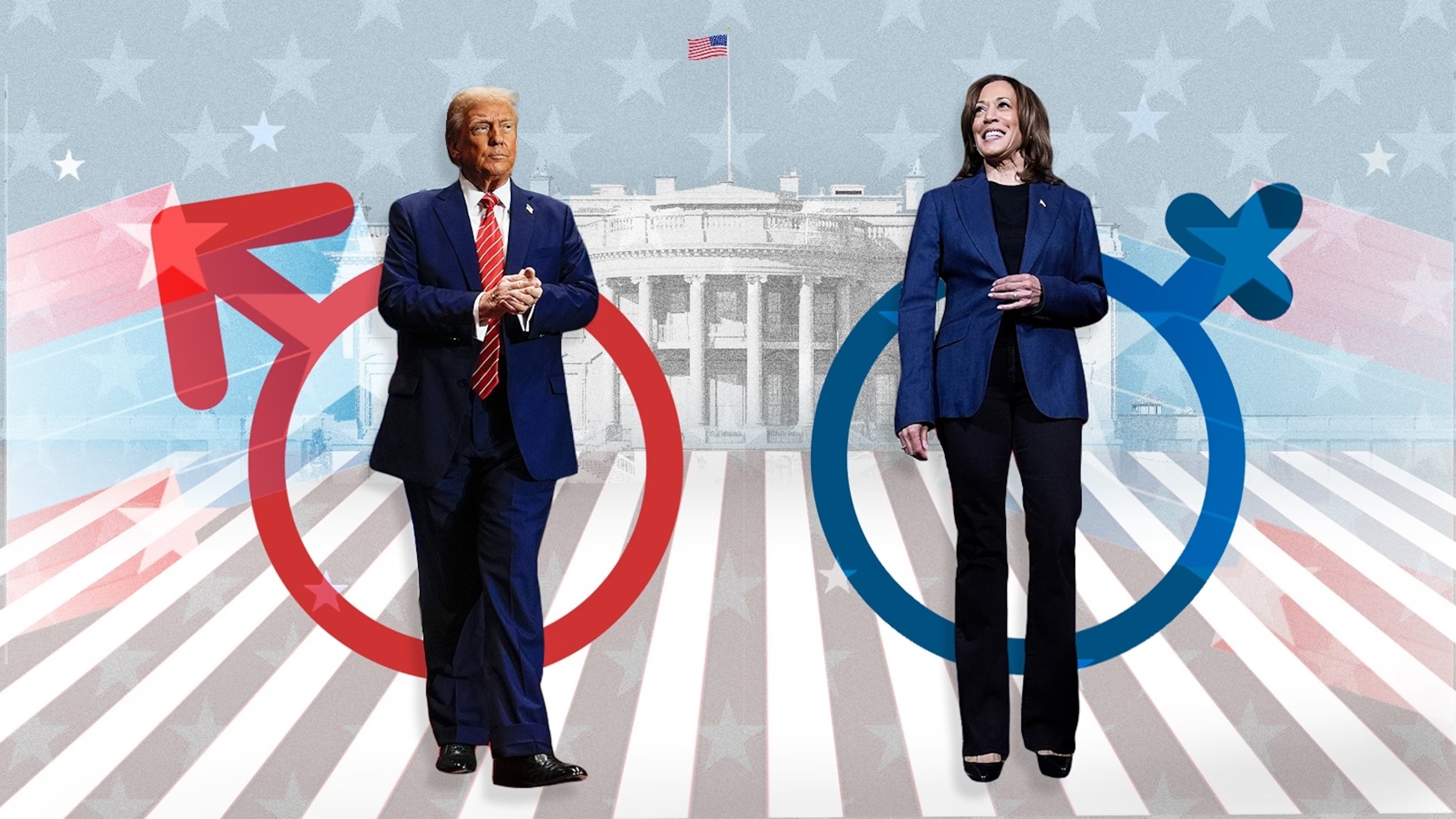

In 2008, 58% of young people leaned Democratic. By 2012, that dropped to 53%. And for the past two major elections, it stayed around 55%. But in 2023, for the first time since 2005, that number fell below 50%, and young people are now showing a shift toward the Republican side. This shift is largely driven by one group in particular: young men. Support for the Republican Party among young men has jumped from 35% to 48%, marking a 13-point rise in just seven years—definitely a new trend.
While 2020 exit polls showed young men supported Biden by a 15-point margin, a Wall Street Journal poll in February 2024 revealed that young men now favored Trump by 14 points. The Democratic Party is facing a real challenge here as they head into November. Can Kamala Harris bring some of these voters back? Here’s what’s motivating young men to lean Republican and what it might mean for the upcoming election.
For young men, the economy is the top concern. For young women, it’s abortion. Seventeen percent of men name the economy as their most important issue, followed by democracy and immigration. Among young women, abortion stands out as the key issue by a wide margin.
The Biden administration’s decision to forgive federally funded student loans is another point of difference, as it impacts young women more than young men. In the 2019-2020 school year, 49% of female undergrads took out loans, compared to 42% of male undergrads, with women carrying 66% of all student debt. Support for loan forgiveness among young women was high—45 percentage points in favor—while young men were split about evenly. That’s a significant gap.

Young men, meanwhile, back the extension of Trump’s tax cuts by a 23-point margin, cuts that included reductions in corporate and some individual income taxes. But young women oppose this extension by 20 points, creating a notable 43-point divide. We rarely see data that splits young voters this sharply; this is something new.
On the topic of abortion, 22% of young female voters consider it their number one issue in this election, a central focus of Kamala Harris’s campaign. Only 3% of young male voters felt the same way.
What are the candidates and parties saying to young voters? Trump and the Republican Party have been pushing messages specifically tailored to resonate with young men. Trump has attended UFC fights, appeared on Logan Paul’s podcast, and even showed up at a sneaker convention to promote his own brand of sneakers. These are male-dominated spaces full of young men, and they’re a way for Trump to say, “I get you. I’m on your wavelength.”
Meanwhile, much of the Democratic Party’s messaging has focused on issues that resonate more with young women. In August, Kamala Harris pledged, “When I’m president of the United States, I will sign into law the protections for reproductive freedom.”
So what does all this mean for November 5? Young women typically vote at higher rates than young men, but experts say that in a close election, the Democratic Party will need to draw in as many voters as they can. The Republican Party, on the other hand, faces the challenge of turning this new support from young men into actual votes.






Leave a Reply