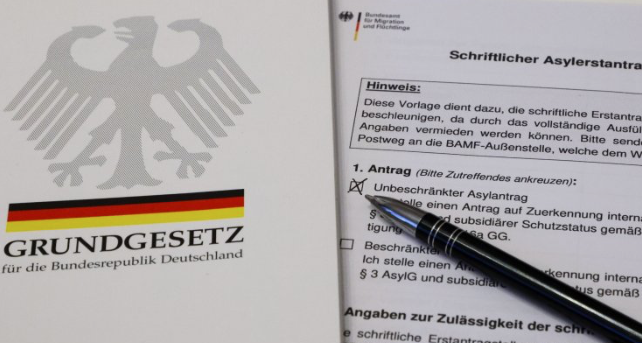
Germany’s asylum policy rests at the intersection between constitutional protections, EU law, domestic politics, and growing public concern regarding migration. The German Basic Law guarantees protection for people who are persecuted for political reasons, while the Federal Office for Migration and Refugees (BAMF) has remained the main administrative hub that works to register, interview, and decide on applications.
This system in recent years has been making its decision-making more efficient. Arrival or “Anker” centers have been expanded. In these places people are registered, have identity checks performed, are interviewed initially, and undergo a health screening. A decision is made and deportations are coordinated if needed. Critics state that these centers can get rid of some procedural safeguards, while the German government states it is working to reduce backlogs and speed up transfers.
There are certain changes in procedure that have recently taken place within the asylum system. There are accelerated procedures in place for certain applicants. With this accelerated application track, it is the goal of BAMF to issue decisions much faster than before. Asylum applicants must stay in designated reception facilities while their case files are being reviewed. Supporters of this policy state that this may in fact target claims that are unfounded even while it reduces time on the waiting list for applicants. Meanwhile, human rights groups warn that this new process restricts access to legal aid.
Regarding the deportation of certain applicants, Germany introduced legislative measures intended to speed up this process. This “Law on Improving Deportation Procedures” took effect in early 2024, and it works to broaden the grounds for declaring certain asylum applications as being inadmissible or unfounded. People in the German government state that these reforms are necessary in order to regain control of irregular migration, while on the other hand, civil society organizations and legal observers have expressed concern that these changes risk eroding procedural fairness, thus increasing the likelihood of wrongful rejections in asylum proceedings.
There have also been some practical restrictions made on benefits and mobility. Legislation was recently approved by the Bundestag which introduced payment cards that limit cash disbursements for asylum-seekers while also getting rid of their ability to initiate money transfers abroad. This move, therefore, reduces incentives for more migration but it also removes any autonomy for the asylum seekers themselves.
Recent data has shown that the workload of this system is in flux. Recent reporting has showcased that the processing time for applications, on average, rose in 2024 to roughly 8.7 months while the number of applications overall dropped. There particularly was a large decrease in asylum claims in Germany in 2024 compared to 2023. Policymakers associate this to less arrivals coming to Germany along with more strict border controls. Therefore, this showcases that tighter immigration can work to a degree. Other people state that these reduced numbers should not provide a justification for lowering the standards.
Germany now is intensifying its cross-border cooperation with EU partners in order to return asylum applicants who are deemed as being responsible to other member states. The German city of Berlin supports quicker “airport procedures” and additional fast-track options that have been proposed by the EU. Berlin also has extended temporary border controls in recent months in order to find irregular entries. These policies are divisive to free-movement, and critics have been vocal about this.
Contemporary German asylum policy combines the preservation of constitutional asylum rights with an administrative move to acceleration and return. The German government argues that these new measures improve manageability and deter misuse of the policies. NGOs, the asylum law monitoring network (AIDA/ECRE), and international agencies have said that there is a need for safeguards in the procedure, decent conditions for the reception of asylum-seekers, and proper legal assistance to ensure that EU obligations are respected with regards to international refugee law.






Leave a Reply