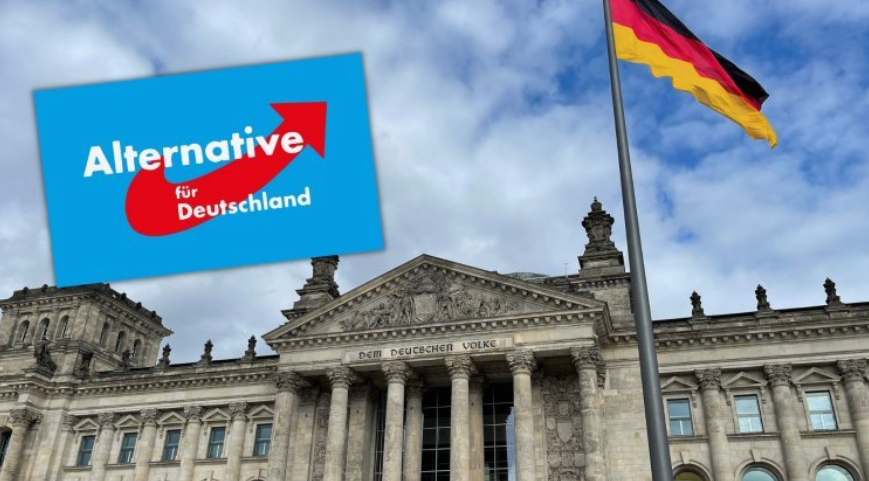
The Alternative für Deutschland, or AfD, is a far-right political party in Germany. It formed in 2013, splitting from various European political notions of the time, while also differentiating itself from other conservative parties. At its start, the AfD appealed to voters who felt frustrated or disenchanted with certain economic and immigration policies in Europe. Throughout the following years, the party became increasingly right-wing and populist, taking advantage of people’s thoughts towards immigration, amongst other topics.
The AfD accelerated its support in particular following a large surge of migration from 2015 to 2016 throughout Europe. At the time, Chancellor Angela Merkel had decided to admit large numbers of refugees, which then stoked fears relating to identity and security. The AfD then was able to change these concerns into a platform that was deeply rooted in anti-immigration sentiment. Particularly, the AfD was committed towards wanting to restore “order” and protect German culture. This anti-refugee sentiment, therefore, was a crucial moment that stood out.
In further elections, the AfD became well-known throughout Germany. During the 2017 German federal election the AfD entered the German Bundestag for the first time after winning approximately 12.6% of the vote. Thus, it became the largest opposition within the parliamentary system. It was the first party politically to the right of the CDU and the CSU that gained representation in the Bundestag since the 1950s. Thus, the AfD gained critical support regarding migration and security issues.
Although its national vote share dipped and rebounded in subsequent contests, the AfD consolidated strong regional footholds — notably in eastern Germany — and continued to convert grievances into votes. In the 2021 federal election the party received just over 10% of the national vote, remaining a durable third- or fourth-party force and a decisive player in certain state elections where its performance reshaped coalition math. The AfD’s steady presence on ballots has forced mainstream parties to grapple with how to respond: ignore, contain, or compete on issues where the AfD scores.
The AfD recently has internally shifted towards having more radical positions and rhetoric attached to it. It favors revisionist and exclusionary language while also amplifying extremist themes. Thus, Germany’s domestic intelligence service, the Bundesamt für Verfassungsschutz (BfV), has come under much more scrutiny in recent years. Following some years of more intensive monitoring, the intelligence agency designated the AfD as a “suspected extremist” organization. Thus, this made it so that deeper, more intensive surveillance could be applied to the political party, thus showcasing how the party was perhaps undermining constitutional democratic norms. This extremist designation, then, was contested both legally and politically. This showcased in stark detail the dilemma that democracies face when it comes to monitoring radicalization within stifling political freedoms and also dissent.
How was it that the AfD was able to succeed while other parties did not gain the same amount of success? There historically has been the East/West divide in Germany, meaning there are a variety of different social and economic factors at play. There also has been an increasing decline in trust in mainstream political parties, thus creating newfound anxieties. From a strategic standpoint, the AfD had very professional campaigning, used social media in order to amplify various narratives including conspiracies, and worked towards the trepidation voters had towards migration and identity politics. Finally, institutional rules within the mixed-member electoral voting system in Germany made it so that the AfD could bring a small amount of support towards being significantly represented in parliament.
By emerging as a driving political force, the AfD is working to pressure mainstream parties regarding policies and tone. It also further complicates the coalition-building process in Germany, thus bringing up questions about the resilience of German democratic norms in the face of normalized exclusionary politics. Germany must respond, and this will then shape the political map for years to come.






Leave a Reply