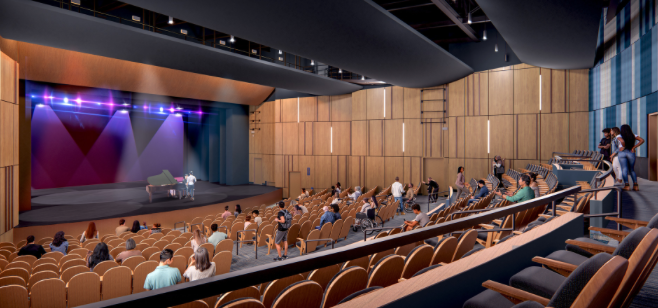
In the middle of a chaotic city, where subway trains rattle and school bells buzz, there’s a quiet kind of magic that happens on the stage. It doesn’t come from special effects or expensive lighting—it comes from students like me, standing under hot lights in a black box theater, reciting lines we’ve rehearsed a hundred times. For many of us in New York City public schools, theater isn’t just an elective. It’s a lifeline. And yet, it’s a lifeline that’s constantly under threat.
Budget cuts, standardized testing, and the push for STEM dominance have shoved the arts to the sidelines in too many schools. In a city known for Broadway, it’s ironic that many of its students rarely get to step on a stage. But here’s the truth: theater matters. It teaches us how to speak, how to listen, how to feel, and how to empathize. In a world that demands soft skills, theater is hard training.
I’ve seen students who barely talk in class come alive as they perform August Wilson or Lin-Manuel Miranda. I’ve seen classmates who struggle with English find their voice through monologues. Theater gives us space to experiment with identity, to imagine alternative realities, and to tell stories that matter. In a system that often forces us into rigid molds, the stage is one of the only places where being different is not just accepted—it’s celebrated.
Performing isn’t about pretending. It’s about revealing. When we take on roles, we learn more about ourselves. When we perform a scene about injustice or inequality, we’re not just acting—we’re processing the very real conditions we see in our neighborhoods. Theater gives us the language to express what we often can’t say in a classroom or a Google Form. It gives us courage.
More importantly, theater builds community. Rehearsals after school aren’t just about blocking and line runs—they’re where friendships are forged and trust is built. In a city as isolating as New York can be, that kind of connection matters. For students dealing with pressure at home, or stress about college, or navigating complex identities, the theater room becomes a sanctuary.
It also teaches responsibility. Missing a cue affects the whole cast. Skipping rehearsal means letting down your team. Unlike a test, where you can cram the night before and maybe get lucky, theater demands consistency, time, and dedication. It rewards effort in ways that feel real. And when the curtain rises, and the lights go up, and your heart is racing—it feels like all that work finally meant something.
There’s also the equity issue. Not all schools have theater programs. Not all principals believe in their value. But that shouldn’t be left to chance. Every NYC public school student should have access to a stage—not just the ones in well-funded neighborhoods. The stories of students in the Bronx, in Queens, in Harlem, in Staten Island—they deserve to be told too. And those students deserve the confidence, creativity, and skills that theater provides.
Theater won’t fix the broken school system. But it can give students tools to survive it—and to challenge it. It can make us feel seen in a world that too often ignores us. And in a time when so much feels scripted and staged in all the wrong ways, it’s nice to find a space where the performance is honest, where the emotion is real, and where the people watching—maybe for the first time—really listen.
So before we dismiss theater as a luxury, let’s remember what it really is: a necessity. Not for applause or awards, but for expression, for healing, for growth. In a city built on stories, let’s not silence the ones who are just learning how to tell theirs.





Leave a Reply